
A mature SOC is not defined by dashboard volume. Real value comes from use-case quality, tuning discipline and the ability to cut noise without losing high-value signal.
Splunk becomes strategic when telemetry, enriched indicators and business logic are tied to decisions analysts and responders can execute quickly.
The starting point is a specific threat scenario, not an isolated SPL query. Teams need to define the behavior of interest, available sources, required fields and the conditions that make an alert actionable. This exposes logging gaps early and prevents the detection program from claiming coverage that the underlying data cannot support.
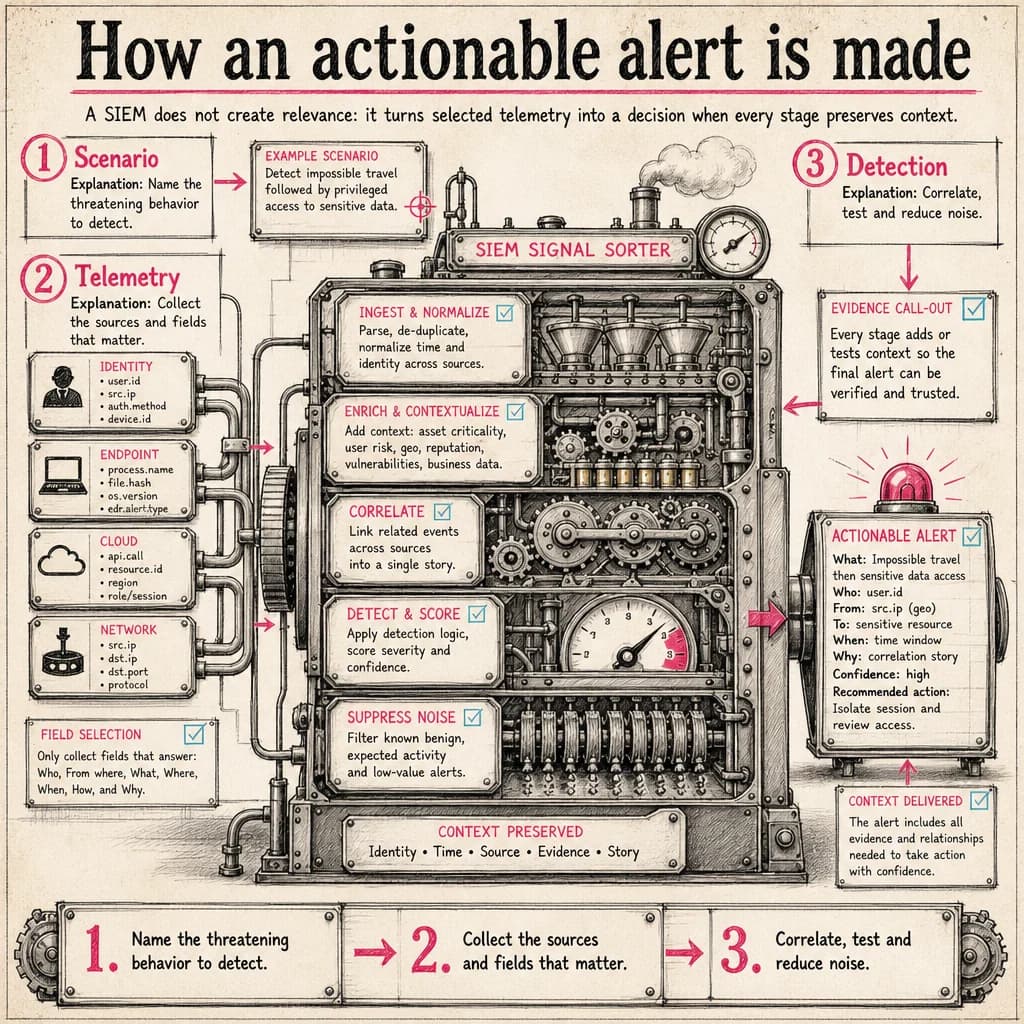
A useful detection also has an owner, a triage procedure and a closure criterion. Identity, asset criticality and relevant history should be available without forcing the analyst to rebuild the entire timeline. The aim is not to automate every decision, but to reserve human attention for the points where context and judgment matter.
Tuning should be managed as a controlled change. A meaningful false positive can lead to a documented exception, enrichment or logic revision. Silently removing a condition may create a coverage gap. A decision log makes it possible to understand why the use case changed, which assumption was updated and how the new version should be tested.
Finally, metrics should illuminate quality: source availability, investigated alerts, qualification time and test outcomes. Raw rule or alert volume does not demonstrate maturity. The practical question is whether the detection helps the team recognize an important scenario earlier and act with more confidence when it occurs.
Achraf Hachimi
CISSP-certified Senior SOC / CSIRT Engineer specializing in Incident Response, Threat Hunting and Detection Engineering. Eight years of experience in critical environments with Splunk ES, Microsoft Defender XDR, SentinelOne and Cybereason.