
Organizations need cyber leaders who can think like an adversary, structure architecture and defend a security trajectory in front of decision makers.
This cross-functional posture reduces blind spots and supports faster trade-offs when threats or regulatory pressure escalate.
Threat analysis brings a critical question to architecture: through which realistic sequence could an incident reach a critical asset? This does not turn every project into an offensive exercise. It tests trust assumptions, identity dependencies, administrative paths and the signals that defenders would need in order to detect the sequence.
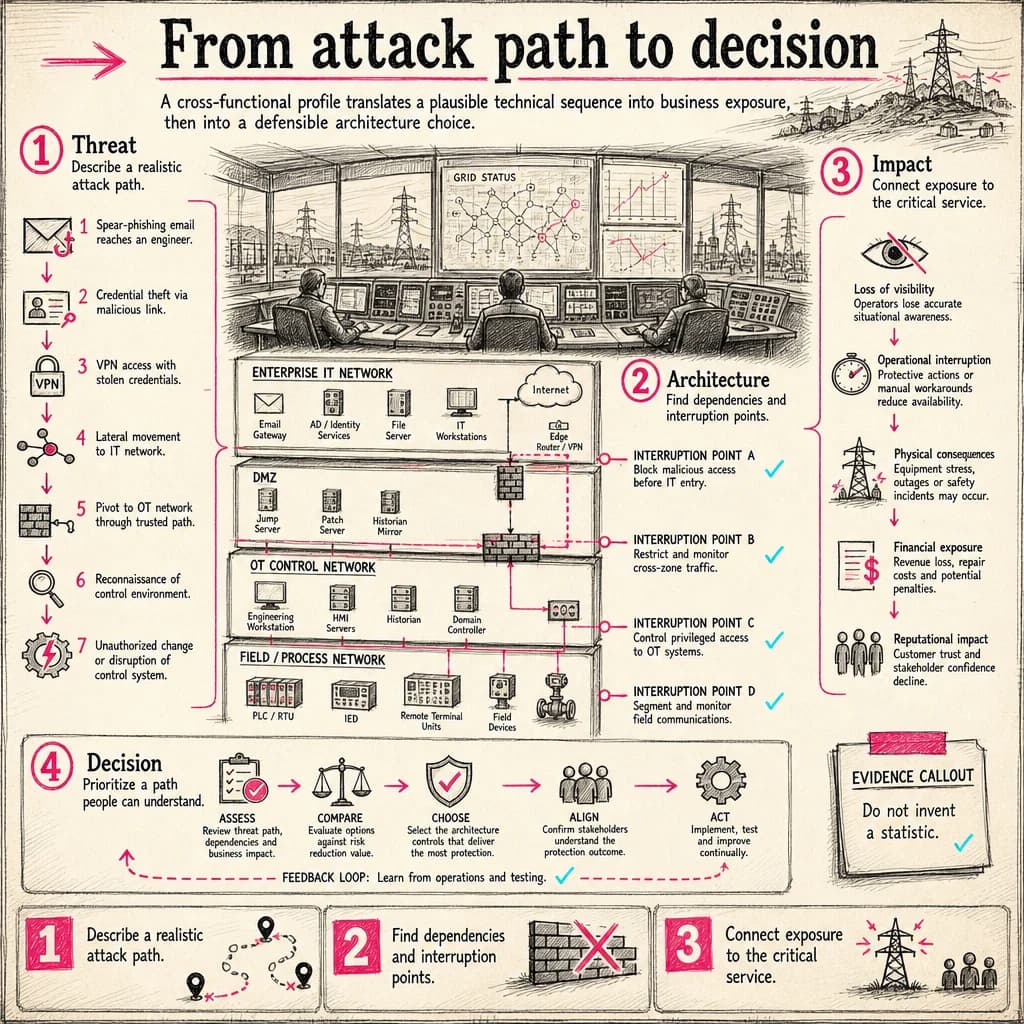
Architecture then turns those scenarios into choices about segmentation, authentication, logging and resilience. Every control has limits: a WAF does not replace application fixes, PAM does not cover every privilege and collecting logs without an investigation process is not detection. Making those limits explicit improves both design and governance.
At board level, value comes from presenting options. A roadmap may prioritize immediate exposure reduction, gradual component modernization or the controlled acceptance of risk. Comparing those paths against the same scenario, with their constraints and evidence, keeps the discussion focused on decisions instead of product categories.
A cross-functional expert does not replace specialists. The role creates reliable interfaces between the SOC, infrastructure, identity, compliance and business teams. The reasoning should remain continuous: the initial risk must still be visible in the chosen architecture, deployed detections, assigned responsibilities and metrics used to track progress.
Achraf Hachimi
CISSP-certified Senior SOC / CSIRT Engineer specializing in Incident Response, Threat Hunting and Detection Engineering. Eight years of experience in critical environments with Splunk ES, Microsoft Defender XDR, SentinelOne and Cybereason.